latinjazz HISTORY
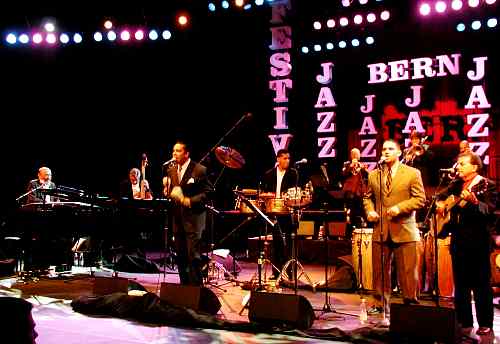
is absolutely no doubt that the African American Jazz is the expression par excellence just as appointing the Salsa - Son direct derivation of Montuno and different types of Cuban Rumba - as the most important musical result of the English-speaking Caribbean, also expressed then sometimes the latinjazz is a combination of both elements because they have the same root: the African continent and the slaves brought to the New World.
The first Africans arrived in America was in 1518. due to the repeated requests of the famous Fray Bartolome de las Casas (the so-called apostle of the Indians). The King of Spain heard their prayers on behalf of the native inhabitants of America and then approved the marketing of black Africans. This unfortunate trade was conducted by Genoese merchants, who bought them in Lisbon, on the basis of a fee of 4,000 slaves annually. That's when the first human cargo arrived in Cuba, landed in subhuman conditions being a few hundred men and women from Guinea and Gold Coast, now the Republic of Ghana.
hundred years later, in 1619 arrived at the port of Jamestown, a ship of Dutch origin - now the state of Virginia - the first human contingent to North America. The African population was divided into three blocks, one moved to what is now the United States, the second to Central America and the Caribbean, and the third mostly to what is now Brazil.
These people belonged to different tribes - mainly Yoruba, Mandingo, dingoes, wambesis - speaking different languages \u200b\u200band had different musical cultures, which were mixed together with the indigenous, and with the news of their "masters "giving rise to a spectacular musical side now enjoys in the world.
musical syncretism which led to latinjazz happened in New York. This cosmopolitan city is the larger cultural world of the world, there arose the modern jazz - although his birth was unquestionably in the city New Orleans, Louisana State - and current salsa, which is "married" by the great Cuban musician Mario Bauza, who had emigrated to America around 1920.
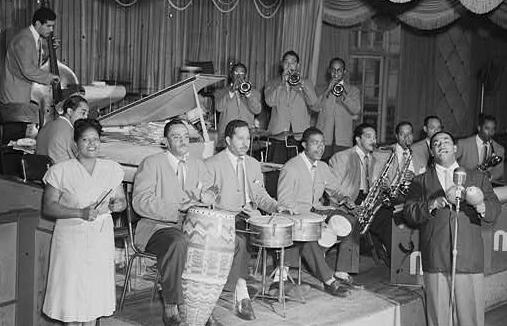
latinjazz The birth was almost an accident. In 1943, with Mario Bauza on a presentation with the Orchestra of Frank Grillo "Machito" finished playing a song, and while the band's musicians seeking the score of the next piece, the pianist Luis Varona and bassist Orestes Julio Andino began playing improvised music notes, in order that the public continue dancing on the track. The rest of the percussive base, including the legendary Ubaldo Nieto and Francisco Aguabella, they followed the compass. Subsequently, the metals did their thing.
The next day, during the trial, Bauzá Orestes and Julio asked to repeat the notes they had played the day before, and as the drum was broken, the rest of the musicians received verbal instructions on what to play . Upon completion of the piece, the orchestra had developed an array of jazz and Latin ingredients. This piece is considered one of the two anthems latinjazz, which bears the name Tanga, whose translation of the Yoruba language means marijuana.
Bauzá then suggests the incorporation of American musicians, including Eddie Bert, trombone, Doc Cheatham, trumpet, and even one of the greatest geniuses of jazz, Charlie Parker on alto sax. Also included gender-related arrangers and willing to participate in the musical marriage of jazz and Latin. Subsequently assumed the form factor of the Big Band to Glenn Miller, Duke Ellington, Count Basie, Jimmy Lunceford, except for two things:
battery exclusion, including replacement timbales, congas, bongos The bell and the maracas, providing all its Caribbean flavor
The "Shufle" is replaced by the Latin syncopation, which is governed by the key. The "Shufle" is the basic rhythm of Swing.
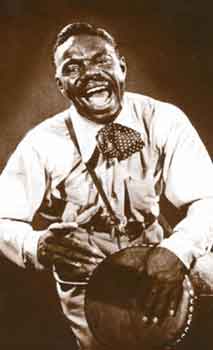
Another significant event in the history of latinjazz was the appearance in the New Yorker's legendary music scene Cuban conga drummer Luciano "Chano" Pozo. Chan is in New York invited by the singer Miguelito Valdez to 1,946. After working with several Latin bands very well known, Mario Bauza said that his friend was about to start a band and wanted a drummer who knew of Cuban rhythms. That friend was Dizzy Gillespie. Upon arriving to Mario and Chano Dizzy's house, Bauza said this: "I have a boy for you, but does not speak English." "No matter" said Gillespie : "let him who touches" And when he did he was hired immediately.

On 29 September 1947, after a few concerts in small venues, it was the debut of the new band of Dizzy Gillespie. The setting was the Carnegie Hall, the famous concert hall at the corner of Seventh Avenue and 57th Street West. Chano Pozo was the hero of the night with a spectacular show, in which combined percussion touches Debutant fast at times when the orchestra kept the Cuban rhythm. This piece was memorable Cubana Be, Cubana Bop.
On top of that, he played some Afro-Cuban songs in the Yoruba language, in honor of the Saints of the Lukumi religion, which rocked the audience. Gillespie later said: "I do not speak Castilian, and he does not speak English, but both speak African." Gillespie Chano and other composers latinjazz anthem, Manteca, which has been covered in a huge number of occasions.
Another important development was the emergence of Palladium, located in the heart of Manhathan, on 53 and Broadway Street, 200 meters from Radio City Music Hall, 300 Carnegie Hall, and ownership of Maxwell Hyman. The Palladium was doomed to bankruptcy when the manager was James Moore, who started the organization called "Latin Nights" in the room called "Blen Blen Club." These Latin dance began in late 1947 with the Machito Orchestra.
mid-1948, the Palladium was unable to accommodate the public who wished to enter. This caused the whole place is transformed into a Latin club, appearing two of the greatest exponents of Caribbean music any time: The two Titos: Rodriguez and Puente, who had begun his career in the orchestra of José Curbelo.
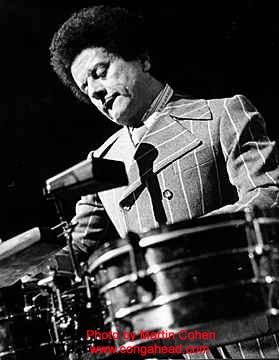
Ernesto Javier Puente was 28 then, and was born in East Harlem in New York, the son of immigrants Ponce, who arrived in the Big Apple when Tito was 4 months pregnant. Pedro Pablo Rodriguez, 28, also was born in Santurce, Puerto Rico. The first was vibraphonist and percussionist graduate of the prestigious Julliard School of Music of New York City, the second was a singer with an extraordinary sense of rhythm when singing guarachas and boleros, having to turn some knowledge of percussion. By leaving the band Curbelo, Tito Puente organizes its Picadilly Boys, and Tito Rodríguez their Mambo Devils, but on reaching the Palladium, both orchestras are naming their names.
In the 60's, removed Palladium, makes her grand entrance the Rock, and exceptions of Cal Tjader, Mongo Santamaria and Tito Puente himself, the latinjazz as the Jazz fell to a certain oblivion.
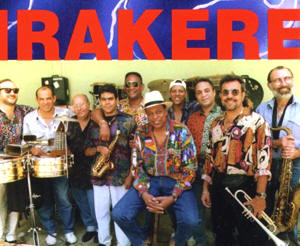
By the year 1978 is when we can say that latinjazz reappears, this time repowering Cuban supergroup Irakere by, who began to show the world that Cuba is the birthplace of rhythm in the Caribbean. This impressive orchestra, conducted by Jesus "Chucho" Valdez, son of memorable Casino pianist Bebo Valdez Beach remains a unique paradigm in the music Afro-Bena.
Born in 1972 of a division of the Orquesta Cubana de Musica Moderna, from the beginning, Irakere, was released by the strength, quality, brilliance and personality of all its members. In this band famous soloists have emerged as Paquito D'Rivera, Arturo Sandoval, Jose Luis Cortes "El Tosco", José Miguel Crego "El Greco" Carlos "Anga" Diaz, the spectacular "Reyes de la Timba" NG La Banda and ultimately Emsemble Havana.
Similarly, Tito Puente, in the year 1984 recorded the album "On Broadway" to be his first recording where he played only latinjazz, winning the Grammy for "Best Latin Album" that year.
In the course of many years, to latinjazz assumed his role as a major jazz events in the world, enriched by the arrival of renowned salsa to their gender. Recent recordings of Eddie Palmieri, Ray Barretto, Francisco "Papo" Lucca under the new label Tropijazz, have given a huge boost to the music.
In Venezuela, in Recent years have cultivated excellent genre for musicians like Alberto Naranjo, Andy Duran, Victor Cuica, Frank Hernandez, among others.
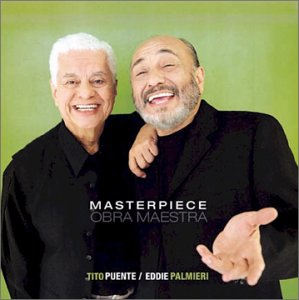
Similarly, the emergence of new great musicians have injected new vitality into latinjazz, as Cubans Juan Pablo Torres (trombone) and Jesus Alemany (trumpet), the Puerto Rican Giovanni Hidalgo (percussion ), David Sanchez (alto and tenor saxophones) and Humberto Ramirez (trumpet); Yorkers Charlie Sepulveda (trumpet), Hilton Ruiz (piano) and David Valentine (flute), Dominican Michel Camilo (piano), Panamanian Danilo Perez (piano) and the Venezuelan Eduardo "Ed" Calle (alto and tenor saxophones), Orlando Poleo (percussionist), Alfredo Naranjo (vibraphonist) and Rodolfo Reyes (tenor and baritone saxophones) with Orchestra "Salsa Jazz Band."
These and many other great performers have made the latinjazz is one of the most listened to genre in the world of jazz.
Source: www.analitica.com


0 comments:
Post a Comment